A pass-through box is an auxiliary device installed between clean and non-clean areas, or between areas of different cleanliness levels. Its core function is to reduce the number of door openings in cleanrooms during item transfer, thereby minimizing air exchange between clean areas and the external environment, effectively avoiding cross-contamination, and ensuring the cleanliness level of clean zones. Designed following the principle of "isolated transfer", it enables safe and clean transfer of items through physical barriers and air flow control, serving as an indispensable key equipment in clean environment management.
product features
1. Interlocking core: Mechanical/electronic interlocking ensures only one door can be opened at a time, blocking cross-contamination.
2. Enhanced cleanliness: Equipped with standard UV germicidal lamps and high-efficiency filters; some models feature self-cleaning cycles to improve transfer cleanliness.
3. Durable and easy to clean: Made of 304 stainless steel, corrosion-resistant with smooth surfaces, meeting clean standards.
4. Flexible adaptation: Floor-standing, wall-mounted, or embedded designs with various cavity sizes, suitable for different spaces and item dimensions.
5. Reliable sealing: Aging-resistant rubber gaskets reduce infiltration of non-clean air.
6. Simple operation: Equipped with handles and status indicators; some models have smart screens for easy use.
Application scenarios
• Pharmaceuticals: Transfer of vials, packaging materials, etc., between clean workshops to prevent production contamination.
• Medical care: Transfer of instruments and specimens in operating rooms and ICUs to avoid bacterial intrusion.
• Laboratories: Transfer of samples and consumables in biosafety laboratories to prevent environmental cross-contamination.
• Food industry: Transfer of raw materials and containers in sterile workshops, meeting food hygiene requirements.
• Electronics: Transfer of components in semiconductor/precision workshops to prevent damage from dust and static.
• Cosmetics: Transfer of raw materials and semi-finished products in sterile workshops to ensure production cleanliness. 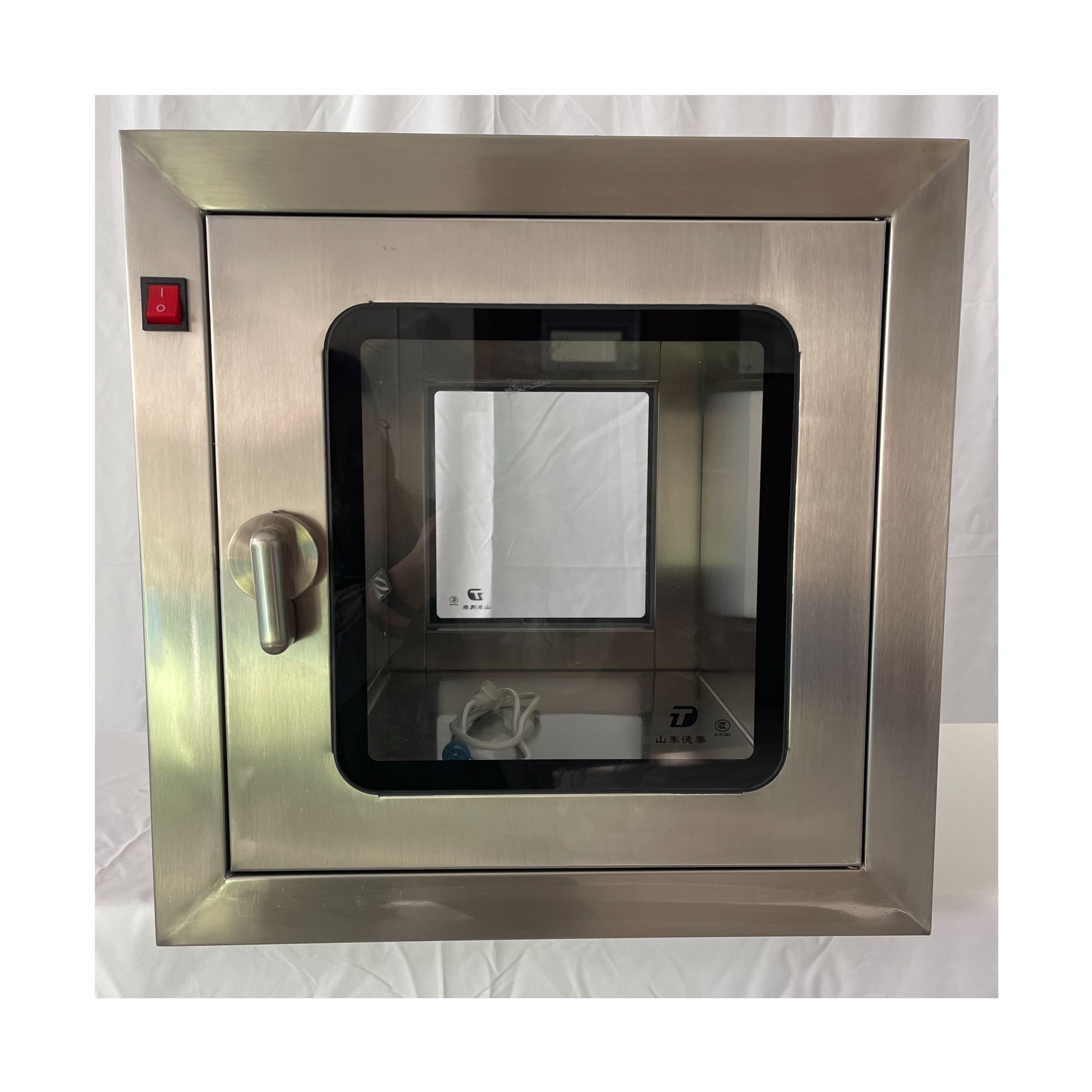
Mechanical interlocking pass-through box
Interlocking is achieved through mechanical structures such as connecting rods, lock bolts, and springs. When a door on one side is opened, mechanical components link to lock the door on the other side. It operates entirely by physical force, featuring a simple structure, high reliability, no reliance on electricity, easy maintenance, and is suitable for scenarios with low dependence on electrical systems.
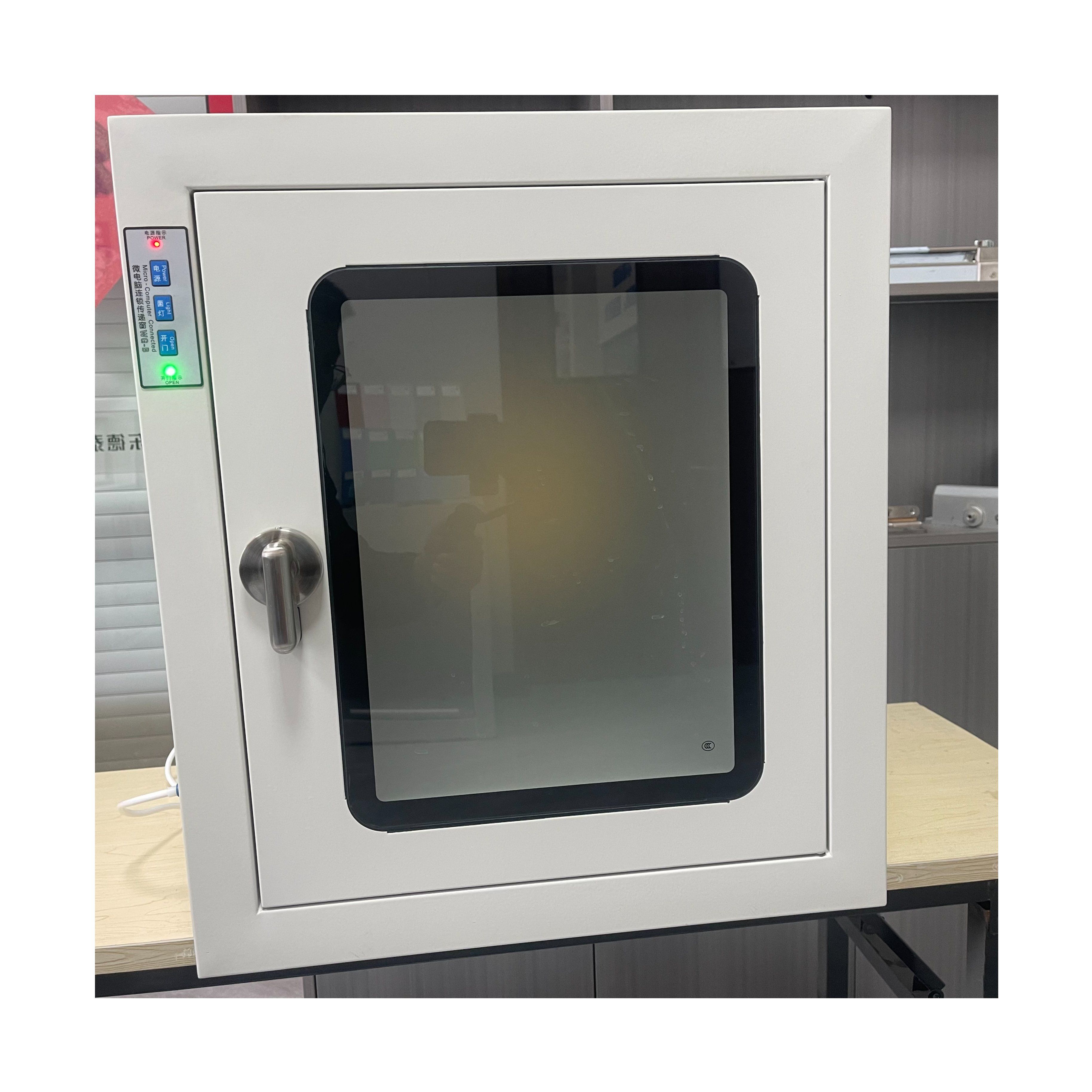
Electronic interlocking pass-through box
Interlocking is realized by electronic components (e.g., sensors, electromagnetic locks, control circuits). When a door on one side is opened, sensors detect the signal and control the electromagnetic lock on the other side to lock via the circuit. It may be equipped with status indicators or delay functions, offering more flexible responses. However, it relies on electricity, is slightly more complex to maintain, and is suitable for scenarios requiring automated control.


